A Comprehensive User Guide to the HIMA ELOP II-NT Programming System
Detailed explanation of core functional modules
(1) Configuration and Resource Management
Key details of functional items
Configure and create the highest level structure, including resources, global variables, libraries, connections, etc., and define at least one bus for PADT communication
Resource allocation: ① Allocate resource types (such as H41q MS, H51q HR) and support online hardware type changes; ② Edit cabinet layout: Add substrates (B9302, etc.) and modules (F3221/F3330, etc.) through Drag&Drop; ③ Configuration parameters: I/O parameters (noise suppression cycle), redundancy mode, safety parameters (safety time/watchdog)
Program instantiation: Each resource only supports one program instance, which needs to be associated with the program type and supports logical diagram editing
(2) Programming and Variable Management
Variable type:
Basic types: BOOL (Boolean), UINT (unsigned integer), INT (integer), REAL (real number), etc;
System variables: including READ (such as I/O.Error, SYSTEM. normal) and WHITE (such as SYSTEM. Logic emergency stop) types, supporting fault state reading and emergency control;
Communication variables: HIPRO-S (safety related), HIPRO-N (non safety related), BUSCOM (MODBUS) variables.
Variable configuration:
Support initial value setting and hardware address allocation (SRS identifier: System. Rack. Plot);
Event configuration: Boolean events (state changes), scalar events (threshold exceeded), buffer capacity of 5000, with timestamp.
Multi tasking:
Up to 32 user programs, supporting priority configuration, 3 multitasking modes (based on actual time/high priority occupying redundant time/fixed cycle);
The scanning time can be configured, and the minimum cycle depends on the security time (≤ 1/2 of the security time).
(3) HIMA standard functional block (12 core blocks)
The block type represents the applicable scenarios for the core functions of the module
Safety output control H8-STA-3 safety output module group shutdown, supporting 10 module/group safety related output circuit group control
Time management H8-UHR-3 date and time setting and synchronization, output minute/hour/day pulse system time calibration, event timestamp synchronization
Temperature processing HA-LIN-3 thermocouple/PT100 signal linearization, fault monitoring temperature measurement signal conversion (accuracy 0.1 ℃)
PID control HA-PID-3 supports P/PI/PD/PID mode, with online parameter modification and closed-loop control of process variables (such as pressure/flow regulation)
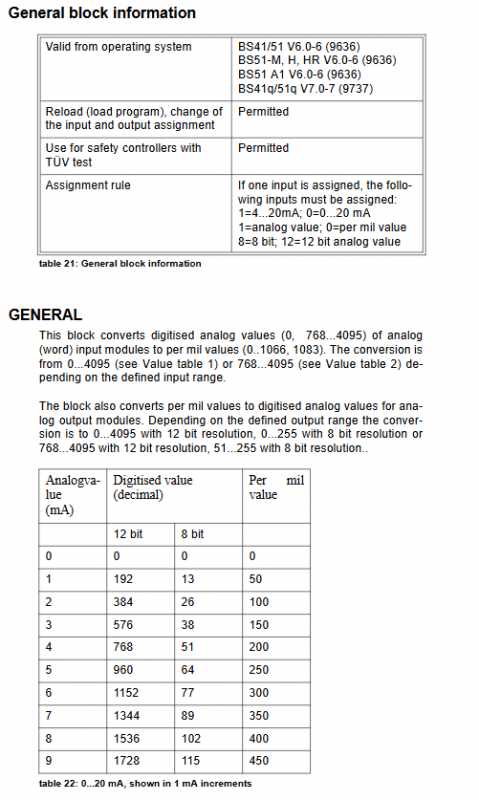
Analog conversion HA-PMU-3 0-20mA/4-20mA and thousandth ratio conversion, supporting 8/12 bit resolution analog input/output signal standardization
Input monitoring HA-RTE-3/HB-RTE-3 analog/digital input module monitoring, redundant data verification F6213/F3235 and other test module fault diagnosis
Output diagnosis HB-BLD-3/HB-BLD-4 digital output module open/short circuit diagnosis, supporting single channel/redundant mode F3331/F3334 module line fault detection
Communication control HK-MMT-3 MODBUS master station function, supports telephone dial-up connection, supports 9-class function code and external MODBUS slave station data interaction
Log configuration HK-LGP-3 LCL report configuration, supports multi controller shared printer, page title editing, event log printing, and emergency message output
(4) Communication protocol configuration
Key parameters for protocol type usage
HIPRO-S security related data transmission ① supports 64 resources (H41q/H51q); ② The monitoring time can be configured, and data will be automatically reset upon timeout; ③ Direct point-to-point transmission with signature verification
HIPRO-N non security related data transmission: ① PES master station serves as the data center, supporting 1 master station → 31 slave stations; ② Data can be kept or set to 0 when disconnected
MODBUS communication with external systems supports function codes 1/3/5/6/15/16, etc; ② Up to 1000 BOOL and 1000 WORD variables can be exported/imported; ③ Support dial-up connection via phone modem
3964R serial communication supports data block read and write, requiring configuration of data block number and data word address
(5) Code generation and loading
Code generation:
Support regular code and reloadable code (online modification without downtime);
Security related configuration: Start target code comparator (dual task generation comparison), generate code verification image (for version tracing);
Loading method:
Download: Shutdown loading (applicable for initial configuration);
Reload: Online reload (applicable for logic modification and variable reallocation);
OS Download: The H41q/H51q series supports operating system updates (requiring BS41q/51q V7.0-7 and above versions).
(6) Online testing and maintenance
Online testing (OLT):
Display system status (RUN/MONO/ERROR STOP), cycle time (current/minimum/maximum), variable status (BOOL variable blue=False/red=True);
Support variable forcing: directly set in the OLT box or Force image, configurable time limit (automatically canceled upon timeout).
Fault diagnosis:
Indicator light diagnosis: 11 types of LEDs (module status/redundancy/fault, etc.), distinguished by color and flashing frequency;
Log diagnosis: Module fault logs (up to 2500), event logs (supporting export analysis);
Error codes: Module level error (e.g. code 2=invalid position), channel level error (e.g. code n2=open circuit).
Document generation:
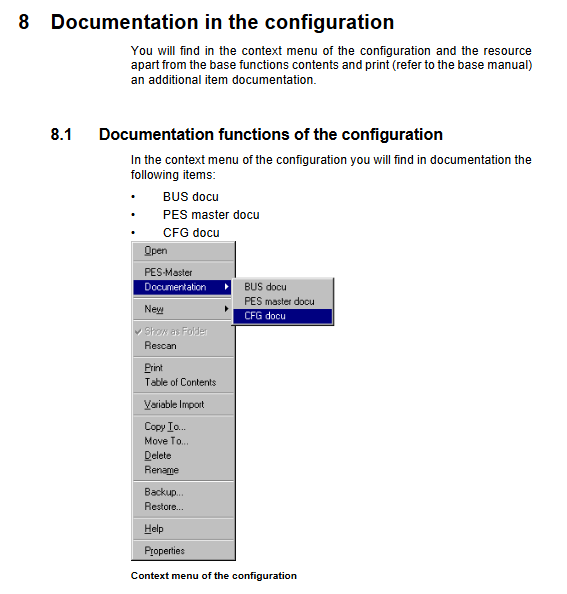
Configuration level documents: BUS docu (bus parameters), PES master docu (master station data transmission), CFG docu (comprehensive document);
Resource level documents: CRF docu (I/O channel information), RES docu (current/generate/load status document), supports exporting ASCII files.
Safety related functions
Security mechanism:
Code tamper proof: C code comparator (detecting program changes), object code comparator (preventing hardware random errors);
Fault response: Redundant modules automatically take over, and when non redundant modules fail, the output is set to a safe state (such as power failure);
Safety parameters: Safety time (0-10s), watchdog time (6-7500ms), must comply with DIN V 19250 AK level requirements.
Operation restrictions:
Only authorized personnel are allowed to perform forced, overloaded, and other operations;
The “Parameters change online” switch needs to be enabled for online modification of safety parameters, and the AK4-6 level needs to be reset afterwards.
Hardware adaptation and expansion
Supporting modules:
Current modules: digital input F3221 (16 channels), digital output F3330 (8 channels), analog input F6213 (4 channels), etc;
Old modules: F3225/F3311, etc., only support H51 system, without integrated security shutdown.
Substrate and Expansion:
Substrate types: B9302 (16 slot I/O substrate), B5230 (H51q central substrate), etc;
System Expansion: Up to 16 substrates (0 central substrate+15 expansion substrates), with a maximum system bus distance of 19.6km (fiber optic).
Key technical parameters
Category indicators
Communication rate RS485: 9600-57600bps; Ethernet: 10Mbit/s; Profibus DP: up to 12Mbit/s
Environmental requirements: working temperature 0-60 ℃, storage temperature -40-85 ℃, protection level IP20
The maximum latency between redundant performance processors is 10 µ s, and the latency between the processor and the farthest I/O module is ≤ 50 µ s
Variable capacity: Up to 523776 global variables, with a maximum of 10 user accounts per resource
Typical operating procedures
Configuration creation → Resource type allocation → Cabinet layout editing → Module parameter configuration;
Program instantiation → variable declaration → logical diagram editing → event configuration;
Code generation (enable security verification) → Download to controller → Online testing → Variable forced verification;
Fault diagnosis → Log export → Document generation → System maintenance (module replacement/OS update).