Eaton Freedom NEMA Contactor and Starter Specification
Positioning and Applicable Scope
Eaton Volume 10 Closed Control Equipment (CA08100012E), October 2019 Edition, Core Introduction:
Freedom Full Voltage Controls (Main Series)
A200 Full Voltage Controls
Freedom Multispeed Starters
Targeting motor starting, forward and reverse rotation, and multi speed control, covering NEMA Size 00~9, suitable for industrial power grids of 380~600V.
Core Product Structure
1. Contactor
Non reversible (ECN01): 2/3/4/5 poles, 600V, continuous current 9~2250A
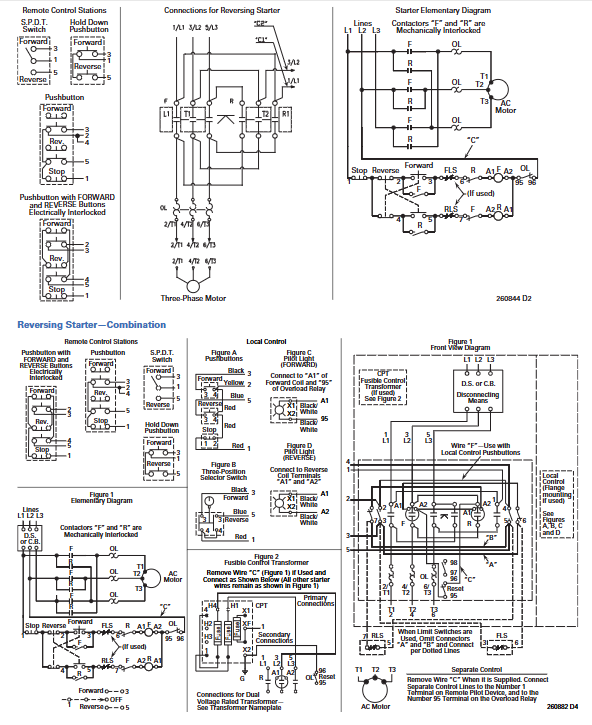
Reversible (ECN02): 3 poles, mechanical/electrical interlock, anti phase short circuit
Number of poles: 2-pole (single-phase), 3-pole (three-phase mainstream), 4/5-pole (special power switching)
2. Starter
Non combination starter
Irreversible: ECN05
Reversible: ECN06
Transformer with CPT control: ECN07
Combination starter
Fuse isolation switch: ECN16 (Fusible)
Non Fusible Isolation Switch: ECN16
Circuit breaker protection: ECN22
Equipped with CPT and fuse: ECN18
Multi speed starter: Freedom Multispeed series
Protection system (critical)
1. Overload protection
Type, Model, Range, Characteristics
Electronic C440 5:1 wide range optional grounding fault, phase imbalance, communication
Bimetallic environment compensation with heating element, classic and economical model
2. Short circuit protection and coordination level
Short circuit breaking capacity: 100, 000A@480V 25, 000A@600V
Coordination and cooperation: UL certified Type 2, equipment can continue to be used after short circuit
Protective components:
Fuse: Class R compatible
Circuit breaker: HMCP and other series, 3A~3000A
Enclosure and Protection (NEMA Type)
Application scenarios of protection types
Type 1 Indoor Universal
Type 3R Rainproof, Outdoor
Type 4/4X waterproof and corrosion-resistant (304/316 stainless steel)
Type 7/9 Hazardous Explosion proof Area
Type 12 Dustproof, Oil, Water Drop
Special structure: horizontal box, oversized box, suitable for high-power starters
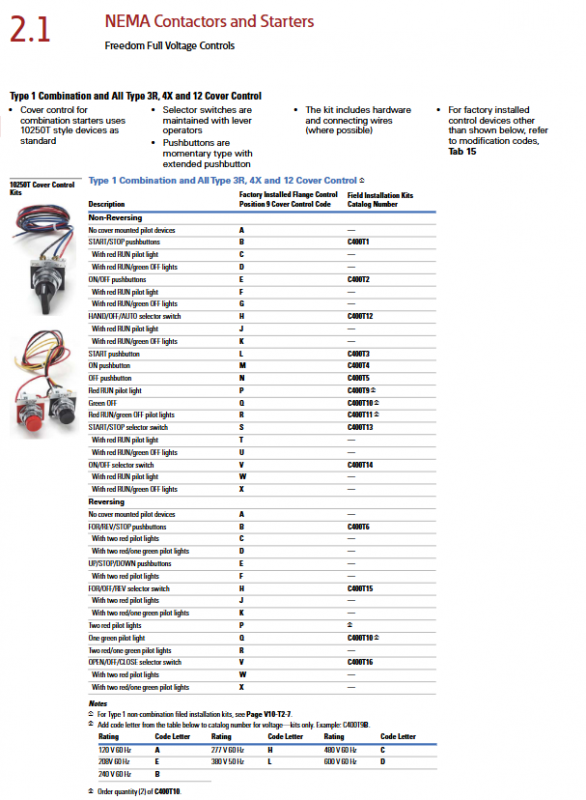
Cover Control
Standard configuration: STOP/START, HOA (manual stop automatic), forward and reverse selection
Indicator lights: Running (red), Stopping (green)
Operating components: M22 series (small box body), 10250T series (large box body)
Code: A=no device, B=start stop, H=HOA, FWD/REV=forward and reverse rotation
Model coding rules (core)
Taking ECN0511AAA as an example:
ECN: Freedom NEMA Enclosed
05: Non combination non reversible starter
1:NEMA Size 1
1: Type 1 shell
A: Coil voltage 120V
A: Control options
A: Overload configuration
Power coverage (NEMA Size vs hp)
table
Typical power of NEMA specification (460V)
00 1.5hp
0 5hp
1 10hp
2 25hp
3 50hp
4 100hp
5 200hp
6 400hp
7~9 600~1600hp
Key issues
Question 1: What are the core advantages of C440 electronic overload compared to traditional bimetallic overload?
Answer:
Wide range adjustment ratio 5:1, reducing the variety of spare parts
Built in phase failure, phase imbalance, and ground fault protection
Optional communication and remote monitoring
Higher accuracy, with a repeatability error of ± 1%
Support Class 10/20/30 trip level switching
Question 2: How to choose between “fuse type” and “circuit breaker type” in the combination starter?
Answer:
Fuse type (ECN16):
Low cost, fast breaking, 100kA short-circuit capability, suitable for stable working conditions and simple maintenance scenarios.
Circuit breaker type (ECN22):
Reusable, easy to debug, with built-in overload and short circuit integration, suitable for devices that require frequent start stop and quick reset.
Jointly meet the coordination and cooperation of Type 2.
Question 3: What are the two safety mechanisms that reversible initiators (ECN02/06/17) must have? Why?
Answer:
Must have dual protection of mechanical interlock and electrical interlock.
Reason: It is a mandatory safety requirement for motor forward and reverse control to prevent phase to phase short circuits caused by simultaneous attraction of positive and negative transfer contacts. Mechanical interlocking ensures that physical closure cannot be achieved simultaneously, while electrical interlocking prevents logical misoperation.