Gefran GILOGIK II Distributed I/O and Control System
Overall positioning of the system
GILOGIK II is a high-performance distributed I/O and automation control system launched by GEFRAN. It adopts a modular plug-in design and consists of a gateway, I/O modules, and a motherboard. It can be independently networked or combined with GT-C/GT-O/GF-BOX to form a complete control platform.
Core performance parameters
Project indicators
Processor ARM 200MHz
I/O refresh time 100 μ s
Synchronous jitter 0 (zero jitter)
Maximum number of nodes 16
Single node maximum I/O 256 points
Communication network GDnet (100Mbps Ethernet)
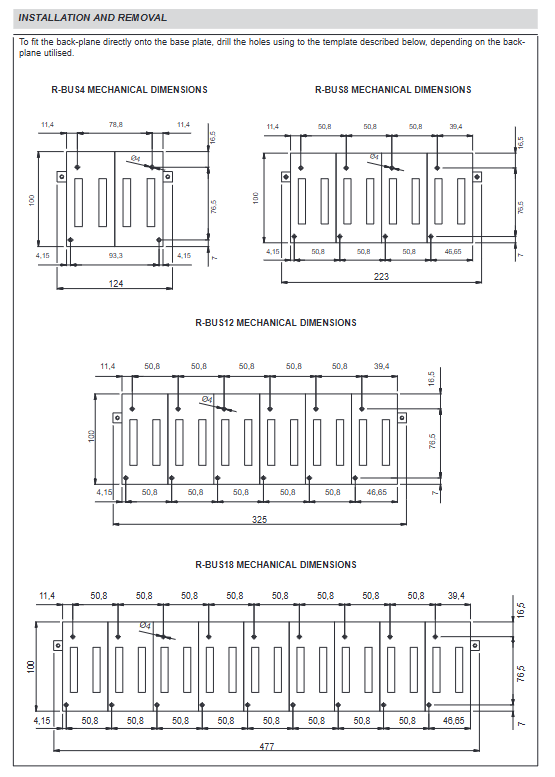
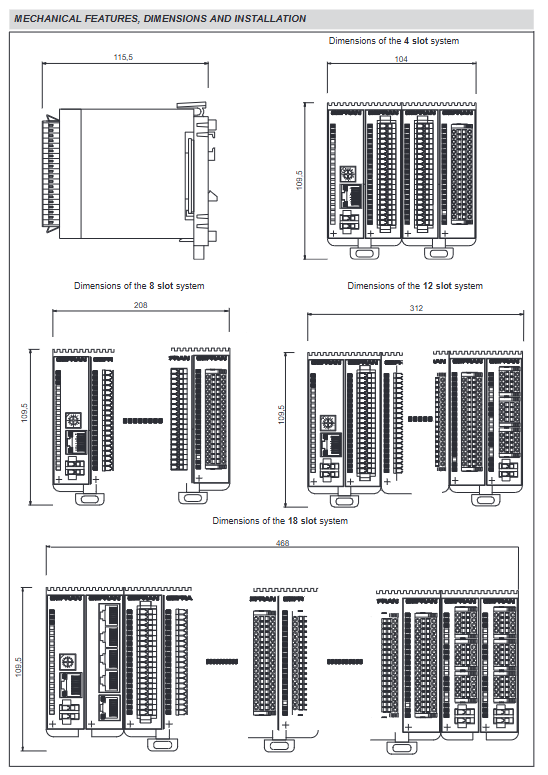
Bottom plate type 4/8/12/18 slots, geographically addressed
Power supply 24VDC, 18~36VDC, maximum 3A
Working temperature: 0~+50 ℃
Protection level IP20
System composition unit
GILOGIK II I/O System
Gateway: R-ETH100 Ethernet gateway, managing I/O modules
Base plate: supports insertion into any slot, no need for continuous arrangement
Wiring: Spring type screw free connector, quick wiring
Installation: 35mm DIN rail or panel direct installation
GT-C panel controller
CPU:Celeron 400MHz~Pentium M 1.1GHz
Display: 10.4/12.1-inch TFT, 800 × 600
Interface: Ethernet USB、 Serial port, CAN, PCI/PC104 expansion
Keyboard: 78 key custom, with status LED
Protection: IP65 front panel
GT-O remote operation screen
Display specifications are the same as GT-C
Remote connection up to 25m away
Powered by GF-BOX, without local power supply
GF-BOX Compact Industrial Control Computer
Same performance as GT-C, without built-in screen
Support remote display of 25m
Suitable for cabinet installation, saving panel space
I/O module specifications
Digital quantity module
R-E16:16 channel 24VDC isolated input
R-U8: 8-channel PNP output, single channel 3A
R-U16:16 channel PNP output
Analog module
R-A/D8: 8-channel analog input, 16 bit
R-D/A4: 4-channel analog output, 16 bit
R-D/A8/16:8/16 analog outputs
Special modules
R-TC8: 8-channel temperature input (TC/RTD), 18 bits
R-C3: 3-channel high-speed counter, supports encoder, up to 250kHz
Installation and wiring specifications
Bottom plate installation: First install the guide rail, then fasten the bottom plate. It is forbidden to install with modules
Module installation: Tilted insertion, rotating clamping, screw free
Wiring: Use a * * ≤ 2.5mm * * screwdriver, insert the wire directly, and prohibit tinning/adding terminals
Heat dissipation: Reserved ventilation space of ≥ 10cm at the top and bottom
Grounding: The module is automatically grounded, and the base plate is grounded at a single point
Typical Application Architecture
Point to point: GT-C+GILOGIK II, Ethernet direct connection
Multi point distribution: GT-C+switch+15 GILOGIK II slaves
Remote operation: GF-BOX+GT-O (up to 25m away)
Key issues
What are the advantages of GILOGIK II’s GDnet network compared to regular Ethernet, and how many nodes can it support up to?
Answer: GDnet is a GEFRAN dedicated real-time Ethernet that achieves 100 μ s I/O refresh, zero jitter synchronization, and much higher certainty than regular Ethernet; The system supports up to 16 nodes, with a maximum of 256 I/O points per node, meeting the requirements of high-speed distributed control.
What are the positioning differences between GT-C, GT-O, and GF-BOX, and in what scenarios are they used?
Answer: GT-C is a panel integrated controller with a screen and buttons, used for device main control operations; GT-O is a pure remote control screen with no computing power, and can be connected to GF-BOX up to 25m away; GF-BOX is a cabinet mounted industrial control computer responsible for computation, and is paired with GT-O to achieve separation of main control and operation.
What are the key designs for wiring and installation of GILOGIK II modules, and what benefits can they bring?
Answer: Adopting a spring type screw free connector, the wiring does not require tools and is fast and reliable; Module buckle installation, no need for screw insertion and removal; Base plate geographic addressing, can be plugged into any slot; The overall design significantly reduces installation and maintenance time, and improves system reliability and vibration resistance.