ADLINK AmITX-AL-I ultra-thin Mini ITX industrial motherboard
Product Overview
1.1 Product positioning
Ultra thin 170 × 170mm Thin Mini ITX low-power industrial motherboard, designed for digital signage, automotive industrial control, medical equipment, self-service terminals, and IoT edge devices; Equipped with Intel Apollo Lake Atom/Pentium/Celeron single-chip SoC, it has a long lifecycle, low power consumption, multi screen display, built-in SEMA machine management BMC, and supports customized models with wide temperature range.
1.2 Full range SoC models and power consumption
Model Core/Frequency TDP/SDP
Atom x7-E3950 4-core 1.6/2.0GHz 12W
Atom x5-E3940 4-core 1.6/1.8GHz 9.5W
Atom x5-E3930 2-core 1.3/1.8GHz 6.5W
Pentium N4200 4-core 1.1/2.5GHz 6W (SDP4W)
Celeron N3350 2-core 1.1/2.4GHz 6W (SDP4W)
All CPUs are equipped with 2MB cache and support VT-x and VT-d virtualization technologies.
1.3 Overview of Core Hardware
Memory: Double layer stacked SODIMM dual channel DDR3L 1600/1866MHz, maximum 16GB, non ECC
BIOS: 16MB SPI AMI EFI UEFI firmware, supports dual BIOS fault recovery, serial console, secure boot
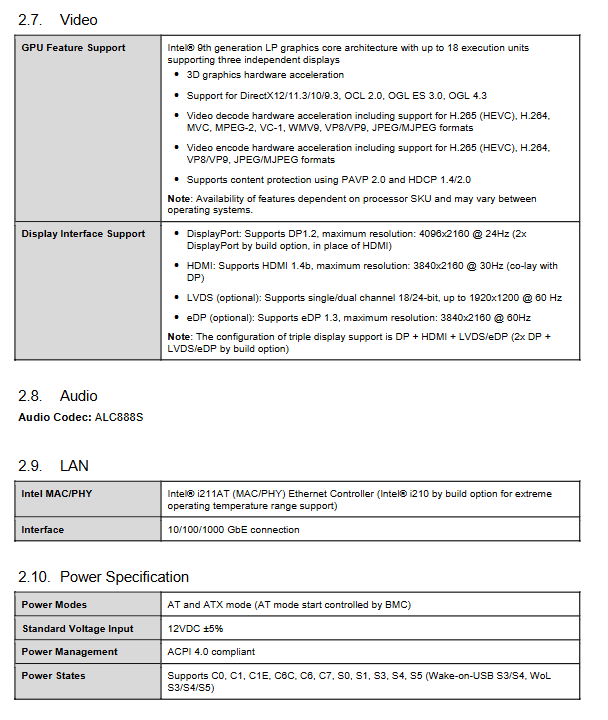
Graphics: Gen9 low-power core display, hard decoding H.265/H.264/VP9, supports independent output of 3 screens
Network: Dual Intel I211AT Gigabit RJ45; Switch to I210 PHY for wide temperature version
Storage: 2-channel SATA 6Gbps, mSATA slot multiplexed with SATA1
Expansion: PCIe x1 full height slot, full height Mini PCIe (with USB), SIM/microSD as onboard customization options
Serial port: 6-way COM, COM1/2 supports RS232/422/485, COM3-6 only supports RS232
Power supply: Single 12V DC input, supports AT/ATX two power on modes
Management: Built in SEMA BMC substrate management controller, integrated watchdog, voltage, current, and temperature monitoring
1.4 Display output specifications (three screen combination)
Rear: 1-channel HDMI 1.4b (up to 3840 x) 2160@30Hz )1 way DP1.2 (highest) 4K@24Hz Can be customized with dual DP instead of HDMI)
Onboard optional: Single/dual channel 18/24bit LVDS or 4-lane eDP, up to 1920 × 1200@60Hz
Combination: DP+HDMI+LVDS/eDP three screens working independently at the same time
1.5 IO complete list
Rear exposed IO
12V DC lock type power port DP、HDMI、 Dual gigabit network, 4xUSB3.0, audio output/microphone
Onboard pins
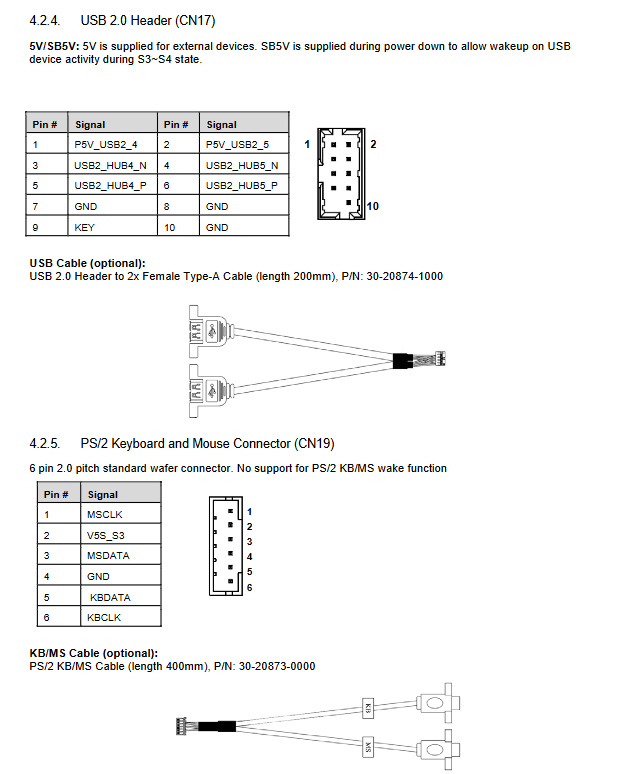
6-way COM, 2-channel USB2.0, front USB/audio, 2xSATA, SATA power supply, PS/2 keyboard and mouse, LVDS/eDP backlight, GPIO/I2C/SMBus, CPU/system fan, 20 pin front panel (power on/off/reset/indicator light), 40 pin DB40 debugging interface (BIOS burning, POST debugging)
1.6 Environment and Power Consumption
Temperature: Standard 0~60 ℃; Atom customized wide temperature version -40~85 ℃; Humidity 10%~90%, no condensation
Vibration impact: Complies with MIL-STD-202G industrial standard, passed HALT accelerated aging test
Tested power consumption (with 4GB memory and SSD)
Saiyang N3350: standby 33.99W, full load 50.60W
Pentium N4200: standby 35.58W, full load 54.75W
Atom E3930: standby 39.84W, full load 53.25W
Atom E3940: standby 45.26W, full load 63.59W
Atom E3950: standby 46.32W, full load 75.70W
Sleep S3 only 0.84W, shutdown S5 energy-saving mode as low as 0.12W
1.7 Operating System Support
Windows10 64bit、Fedora、RHEL Linux; VxWorks BSP TBD
Mechanical Layout and Dimensions
Size standard Thin Mini ITX: 170mm × 170mm, board thickness<18.3mm (excluding battery)
Mechanical dimension diagram of motherboard
Component layout: Annotate CPU, dual SODIMM, PCIe x1, Mini PCIe/mSATA, LVDS, COM pins, fans, various jumpers
Bottom of solder pad: microSD, SIM card slot, DB40 debugging 40pin cable socket
Rear interface of motherboard
Complete Definition of Connectors and Jumpers
Rear External Interface
12V DC lock type power supply: It is prohibited to connect the built-in 4pin ATX power supply at the same time, and it cannot be hot swappable
DP/HDMI complete differential, DDC, HPD pin definitions
Dual Gigabit RJ45: 8-wire Gigabit differential, dual color link/rate indicator light
USB 3.0 standard 9-pin high-speed differential interface
3.5mm audio output/microphone jack, shared with onboard audio pin signal
Key points of internal onboard connectors
SATA1/mSATA reuse: JP11 jumper switching, selecting mSATA will render SATA1 invalid
LVDS backlight: JP2 backlight 5V/12V switching; JP4 backlight high and low level enable; JP3/JP5 LCD screen power supply 3.3V/5V/12V three levels optional
COM1/2 serial port: SWS1M/SWS2M dial-up switch RS232/422/485; JP7~JP10 select serial port power supply 0/5/12V
AT/ATX mode jumper JP1:1-2 AT constant power supply, 2-3 standard ATX
Clear CMOS jumper JP6: Power off, short circuit 2-3, clear BIOS and system time
Front panel 20 pin: power button, reset, hard drive LED, system sleep indicator, front USB/audio
Feature 28 pin expansion pins: 10 GPIO, I2C/SMBus, chassis lid opening detection, temperature analog input
Dual fan socket: CPU fan, system fan, SEMA can read speed, PWM speed regulation
DB40 debugging cable: used for BIOS burning, POST fault codes, BMC debugging, power testing points
Key Jumper Table
General diagram of jumper positions
Table
Jumper/switch function
JP1 AT/ATX power supply mode
JP6 Clear CMOS clears BIOS
JP11 SATA1/mSATA switching
JP2 LV backlight 5V/12V
JP3/JP5 LVDS screen power supply voltage
JP4 backlight enable level
SWS1M/SWS2M COM1/2 serial protocol switching
JP7~JP10 COM serial port power supply selection
SEMA Intelligent Embedded Management System (Core Industrial Features)
SEMA is an onboard independent BMC microcontroller that does not rely on CPU/system. It can monitor the basic status even when the whole machine is powered off, and its functions fully cover industrial remote operation and maintenance needs
Hardware monitoring and collection items
Voltage acquisition: CPU core display, memory, 12V input, 5V, 3.3V, standby 3.3V, RTC battery
Current monitoring: Real time input of total current, sampling and saving 4 sets of historical values every 250ms
Temperature: CPU, motherboard startup/minimum/maximum temperature, over limit alarm
Fan speed reading, supporting intelligent temperature control curve
Logging and Counting Function
Total running time of the whole machine, single boot time, total power on times, BIOS boot count
System restart traceability record: power failure, watchdog, external reset, BIOS fault classification tag
1KB customer customized Flash storage area, 128 byte encrypted protected partition (serial number/key storage)
Watchdog WDT
The power on automatic watchdog can be BIOS turned on/off; Timeout automatic hard reset, software configurable timing duration, restart can read whether WDT triggers downtime
Dual BIOS Fault Redundancy
BMC automatically switches to backup BIOS firmware when BIOS startup exception occurs to prevent firmware damage and inability to boot up
Alarm mechanism
Hardware abnormalities (overheating, undervoltage, power loss) are encoded through the blue status light, and the BMC register synchronously stores the abnormal code, which can be read and troubleshoot by software
Supporting Tools
SEMA Windows/Linux software, underlying API library, supports reading all monitoring data, controlling backlight, turning on/off watchdog, and reading boot logs
System Bottom Level Resource Mapping
Provide a complete address table for the bottom layer of industrial control secondary development:
System memory address range (4GB high-order BIOS, APIC, ISA reserved holes)
Hexadecimal allocation of IO ports (serial port, SuperIO, SATA, PCI controller)
PIC/APIC two modes IRQ interrupt allocation table
PCI/PCIe device bus, device, function number topology
PCI interrupt routing mapping, SMBus slave device address (memory, BMC, GPIO extension)
AMI EFI BIOS Complete Menu Description
Press Del to enter UEFI settings during startup, which is divided into 7 main menus and supports serial remote console (COM1-6 optional)
Main Page
Read only motherboard serial number, manufacturing date, CPU/memory information; System date and time can be modified
Advanced Menu (Industrial Control Core Configuration)
CPU settings: VT-x/VT-d virtualization, turbo frequency, C-State energy-saving, temperature protection
Graphics card configuration: LVDS/eDP resolution, backlight brightness, priority for multi screen output
Power management: ACPI sleep mode, RTC timed power on, power-off restoration to power on state, ECO ultra-low shutdown power consumption
System management: SEMA firmware version, boot counter, watchdog switch, fan intelligent speed control gear
Thermal management: CPU/motherboard temperature threshold, mute/balance/performance fan strategy
Super IO: 6-way serial port address IRQ allocation, RS485 direction control
Serial port redirection: supports remote debugging BIOS POST without display
USB、 Network, SDIO, TPM trusted computing, chassis intrusion detection switch
Chipset Chipset Menu
North Bridge: Memory frequency, memory remapping above 4G, DVMT allocation for core graphics and video memory
South Bridge: SATA AHCI/RAID switching, PCIe speed, HD audio, USB controller switch
Security Menu
Administrator/user two-level boot password, Secure boot configuration
Boot startup menu
Startup sequence, fast self-test, UEFI/Legacy compatible CSM switch, PXE network boot
Save & Exit
Save/abandon restart, load optimal/fail safe default BIOS parameters, single temporary boot device
Safety operation standards
Disassembly and assembly must be done with anti-static wristbands and workbenches. Damage caused by static electricity is not covered by warranty
The 12V power supply is not hot swappable, and it is prohibited to connect both the rear DC and the built-in ATX power supply simultaneously
The replacement model of the CR2032 lithium battery on the motherboard is incorrect and there is a risk of explosion. The waste battery is being recycled in compliance with regulations
4. The working environment should not block the air ducts, and wide temperature models still need to be matched with heat dissipation solutions
Private disassembly, water ingress, mismatched voltage, and physical impact are not covered by the warranty